Have you ever questioned what is so special about photographing in 24mm? Or, have you ever thought about what focal length is good for landscapes is but in no way been completely sure what it is? The truth is that there are many angles you can quite easily shoot at. Each time you change focal length in or out, you will be affecting the overall look and sense of your photo. Let's look more intimately at the 24mm approach. Why is it so good?
There are many benefits of photographing at 24mm. I use a beautiful Canon L series lens at 24mm for landscapes. The best 24mm lens is one that will be likely to continually supply you with an adequate range or width. Any Canon 24mm lens (or Nikon 24mm lens) has the ability to get rid of the dreaded "warp" that comes with subjects photographed too close with the ultra wide lenses. If you are unfamiliar with what this means, simply head to the Internet and search for a few wide angle pictures of tall structures taken up close with lenses less than 17mm. In some landscape photography situations it can work well, and in others it does not. Now and then, when you taking photos at an ultra wide position, the landscape you are shooting can look like it's bulging in the middle. If this happens, then why not try photographing at 24mm?
When photographing landscape photography we want to aim for "large", but not "bending" in the center, as some ultra wide angle lenses can produce. This is where the wonderful 24mm focal length comes in. It generates a wide scene without appearing unnatural or bulges at the heart of the photo. Not only is it a good overall length to take photos at, but you can photograph at 24mm to create panoramas. What I mean is 24mm makes for a beautiful single photo AND it can be a perfect shooting length to stitch numerous single photos collectively to capture a panorama.
You see if you took a handful of photos photographed at 17mm or less, and stitched them as one, you may certainly see an uncomfortable bulge. This is what happens when ultra wide shots are stitched to make an individual panorama. Unless you are trying to generate a fisheye effect it will not work suitably. When shooting with 24mm this awful effect does not happen. We are left with a wide angle good enough for a single photo and just right to create a series of pictures for a panorama.
To get a better idea of the quality of the average 24mm wide angle lens, ask yourself does the photo have a sensible perspective? For example, do you notice any unnatural warping or bulging in the horizon line or along the forefront? No, we can't. That is more often than not a sign that the 24mm focal length is just right for the purpose.
Is this 24mm lens generally "wide enough"? Yes it is. And the beauty about this focal length is that we can bring three single images at 24mm and generate a gorgeous panoramic scene. Some lenses that are ultra wide, such as the 17mm or less, can bulge a composite a lot.
You can photograph a succession of photos taken from the same perspective and using a tripod to ensure good results. Then use Panorama Maker Pro 6 photo editing software to merge or stitch the images together into a single frame. You will discover that 24mm is most ideal because it does not bulge the panorama in the middle as a 17mm series of photos would.
Once you stitch your 24mm photo sequence together then look to see if the image is effective because of the additional surroundings at the edges. The answer is going to be relative because it has to do more with personal fondness and the intention of the photographer.
Once you have stitched a handful of 24mm photos together to construct a sole panorama, sit back, and take a good look at it. You will find that it looks like a realistic scene.
Article Source: http://EzineArticles.com/7323389
Saturday, February 28, 2015
Saturday, January 31, 2015
Digital Photography On Vacation
Going on holidays or vacation to get away provides one of the best digital photography opportunities that must not be missed. Most people take the usual digital photography "snaps" without really looking an examining their environments first.
The normal holiday digital photographs are taken with hard light over exposing parts of the picture, and the digital image is always the same. One or two people standing near a monument with the usual holiday clothing on...it's the same ting over and over again.
If you want to get interesting digital photography opportunities then firstly the thing to do is not do what everyone else does! So let's looks at ways you can make you digital vacation photos interesting so that you can use them to hang on the wall or give away as postcards when you get back, or greeting cards. Ahh, what the wonderful world of digital photography can do for the soul!
Firstly the get your digital photography really interesting and stimulating when going on holiday is to research as much as you can about the area you are going to, and, the season you are going in, and what the temperature is likely to be. This is called digital photography preparation; not just holiday preparation.
Discover what things you will be likely to visit. Are you going to a fairly established area, such as old churches that have been around for centuries and you are aiming to get your digital photography experience reflecting the beauty and the art work in these old buildings?
Or perhaps you are having an action holiday with hot summer days, beaches, hotels, lying by the pool....in that case then your digital photography will be a completely different experience. Your digital photography needs will be very different and require different things.
If you perhaps want to do a bit of both; churches in Rome then Hawaii on the flight back then you have an even more interesting set of digital photography requirements. Most digital photography professionals may take two cameras, one digital camera for one scene or situation and a traditional camera with film for another situation. But being an enthusiast, you don't have to go to that length; there are some things you can do.
The reason I say to investigate further about what it is you really want to see when you are on your vacation is to see what kind of light you will be working with. If you are going to see some beautiful European churches in winter time then the light will be very different from the light on a beach in summer time in Hawaii. Digital photography is the type of activity that requires you think about what you are doing first. Always think about your digital photography in this way because light can be very different in other places and especially if you are going to a different season.
Good luck!
Article Source: http://EzineArticles.com/264252
The normal holiday digital photographs are taken with hard light over exposing parts of the picture, and the digital image is always the same. One or two people standing near a monument with the usual holiday clothing on...it's the same ting over and over again.
If you want to get interesting digital photography opportunities then firstly the thing to do is not do what everyone else does! So let's looks at ways you can make you digital vacation photos interesting so that you can use them to hang on the wall or give away as postcards when you get back, or greeting cards. Ahh, what the wonderful world of digital photography can do for the soul!
Firstly the get your digital photography really interesting and stimulating when going on holiday is to research as much as you can about the area you are going to, and, the season you are going in, and what the temperature is likely to be. This is called digital photography preparation; not just holiday preparation.
Discover what things you will be likely to visit. Are you going to a fairly established area, such as old churches that have been around for centuries and you are aiming to get your digital photography experience reflecting the beauty and the art work in these old buildings?
Or perhaps you are having an action holiday with hot summer days, beaches, hotels, lying by the pool....in that case then your digital photography will be a completely different experience. Your digital photography needs will be very different and require different things.
If you perhaps want to do a bit of both; churches in Rome then Hawaii on the flight back then you have an even more interesting set of digital photography requirements. Most digital photography professionals may take two cameras, one digital camera for one scene or situation and a traditional camera with film for another situation. But being an enthusiast, you don't have to go to that length; there are some things you can do.
The reason I say to investigate further about what it is you really want to see when you are on your vacation is to see what kind of light you will be working with. If you are going to see some beautiful European churches in winter time then the light will be very different from the light on a beach in summer time in Hawaii. Digital photography is the type of activity that requires you think about what you are doing first. Always think about your digital photography in this way because light can be very different in other places and especially if you are going to a different season.
Good luck!
Article Source: http://EzineArticles.com/264252
Sunday, January 4, 2015
How To Avoid This Number One Mistake Others Have With Travel Photography
I spoke not long ago about travel photography. I'd like to discuss a particular problem with travel photography, and it's not with the camera, it's with us.
One thing that you might notice whilst travelling is the lighting differences between the place you are visiting and home. Your digital camera 'light settings' will still be set to where you came from, not where you are when you are travelling to.
Last year I went London on business and while I was there I discovered something very important. I had my trusty Sony set to an E/V of 1.0+. This really means, in English, that I had the eye of the camera adjusted to reduce some light because light here in Australia is so bright. I realised what a bright environment we live in down under when I went overseas. In a nutshell I had my camera set to 'Australian light settings', not 'UK light settings.' It's not really called a 'light setting', but I'll use that term for the purpose of simplicity.
When I got to London I looked at the viewfinder and everything looked really dark. I was confused at first but had a suspicion. So I took a few test shots to try out my feeling about what was happening. I was right I had the camera on the wrong setting for London light. My first test shots I focused the camera at the brightest part of the object I was taking and took the shot. As a result my pictures came out either too bright or too dark.
I then took the E/V up to 1.7+ and got the right shots. I got the right shots because I adjusted the amount of light that was coming into the camera. And to me, coming from such a bright place and going to London to me, seemed a darker place generally. Not bright, glary light like Melbourne. However this light is fantastic for digital photography if you have filtered light like this. In Australia we are constantly ranting "the polariser! the polariser!" But in London, at times, I could get away with not having it on the camera at all.
So please remember the first thing you do with that digital when you are travelling is to look at what you have the camera set to accept new lighting conditions. You may need to adjust the aperture if you are going from one continent and one season to another. Each season has a different light and varies from country to country.
Have a great day.
Article Source: http://EzineArticles.com/223453
One thing that you might notice whilst travelling is the lighting differences between the place you are visiting and home. Your digital camera 'light settings' will still be set to where you came from, not where you are when you are travelling to.
Last year I went London on business and while I was there I discovered something very important. I had my trusty Sony set to an E/V of 1.0+. This really means, in English, that I had the eye of the camera adjusted to reduce some light because light here in Australia is so bright. I realised what a bright environment we live in down under when I went overseas. In a nutshell I had my camera set to 'Australian light settings', not 'UK light settings.' It's not really called a 'light setting', but I'll use that term for the purpose of simplicity.
When I got to London I looked at the viewfinder and everything looked really dark. I was confused at first but had a suspicion. So I took a few test shots to try out my feeling about what was happening. I was right I had the camera on the wrong setting for London light. My first test shots I focused the camera at the brightest part of the object I was taking and took the shot. As a result my pictures came out either too bright or too dark.
I then took the E/V up to 1.7+ and got the right shots. I got the right shots because I adjusted the amount of light that was coming into the camera. And to me, coming from such a bright place and going to London to me, seemed a darker place generally. Not bright, glary light like Melbourne. However this light is fantastic for digital photography if you have filtered light like this. In Australia we are constantly ranting "the polariser! the polariser!" But in London, at times, I could get away with not having it on the camera at all.
So please remember the first thing you do with that digital when you are travelling is to look at what you have the camera set to accept new lighting conditions. You may need to adjust the aperture if you are going from one continent and one season to another. Each season has a different light and varies from country to country.
Have a great day.
Article Source: http://EzineArticles.com/223453
Monday, December 22, 2008
Trip to NANAS
Noah’s Ark Natural Animal Sanctuary or for short NANAS. NANAS is a private animal shelter which was relocated from Singapore to Pekan Nanas, Johor in Year 2000. Home to 700 free-roaming dogs, cats, horses, it occupies 10 acres of land in kampong-style settings. NANAS aims to provide a safe and secure home for their animal residents where they can live out their lives in happiness.

From these photos, you can that there are many dogs around. In fact, when I squat down to pet one of the dogs, more would come over to seek attention too. It was overwhelming when a few dogs started to surround you.


Friday, December 19, 2008
Visit to Animal Paradise, Johor Bahru
Animal Paradise is run by Johor Bahru-based Amituofo Buddhist Centre and is home to more than 1000 animals of 20 types of animals, including dogs, cats, goats, ostriches, pythons, in different enclosures, which were all strays or abandoned. An eye-opener where you get to see animals up close, mingle with friendly goats & see flying roosters.
Here are some of my photos :
A happy and carefree goat. (I took a number of shots before I got this nice shot.)

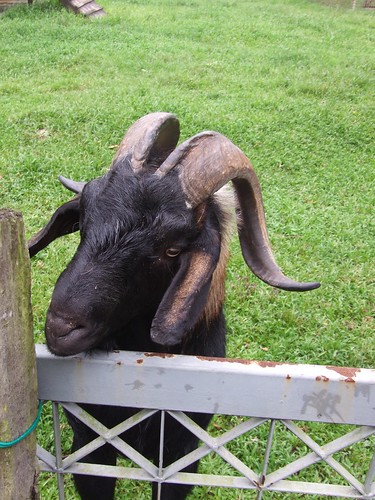
A sad looking goat.
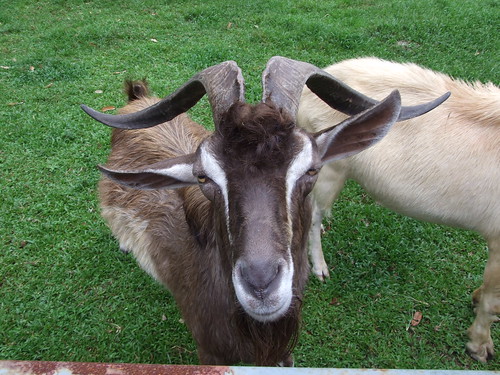
Another sad looking goat.
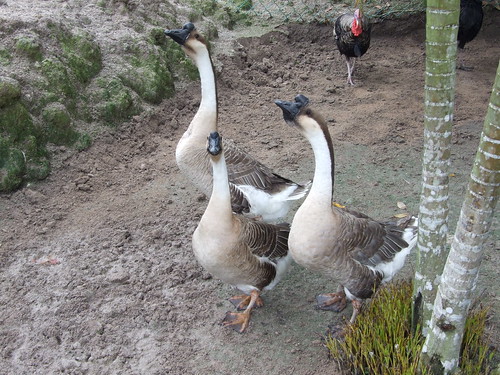
Three geese, walking down the muddy path.
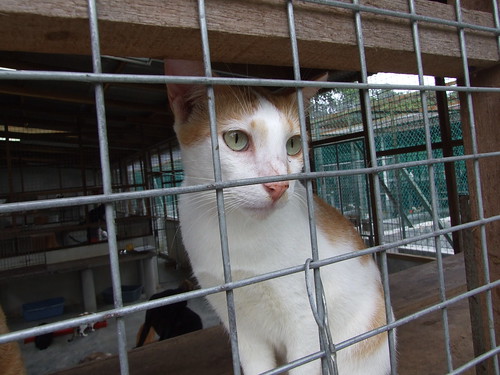
A sad looking cat seems to say "Let me out".
A horse rescued from the wild in Malaysia.

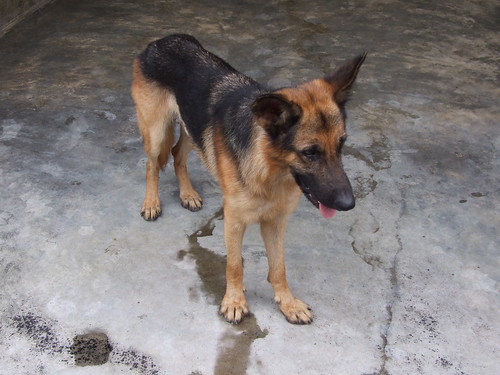
A dog longing for love.
A golden retriever
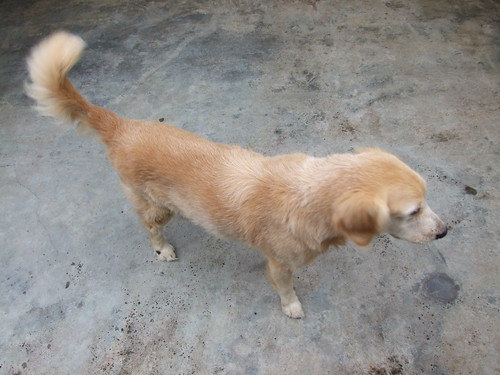
longing for a pet

and love.

A happy and carefree goat. (I took a number of shots before I got this nice shot.)
A sad looking goat.
Another sad looking goat.
Three geese, walking down the muddy path.
A sad looking cat seems to say "Let me out".
A horse rescued from the wild in Malaysia.
A dog longing for love.
A golden retriever
longing for a pet
and love.
Wednesday, October 1, 2008
Visit to Penang Butterfly Farm
Penang or its Malay name of Pulau Pinang is made up of a turtle-shaped island, a total of 292 square kilometers, and a strip of land called Seberang Prai on Peninsular Malaysia about 48 kilometers wide.


Penang Butterfly Farm (PBF) was established in 1986 in Penang, Malaysia with 2 main objectives which are to function as a tourist destination and to serve as a centre for education, recreation and scientific research. The visitor to the Penang Butterfly Farm, finding himself surrounded by a myriad of fluttering butterflies within a seemingly natural setting, is likely to think himself in a sort of enchanted wilderness, bejeweled with colorful gems of creation. The best encounter at the Butterfly Farm is undoubtedly the free flying papilions in the enormous enclosure. The exhibition of selected insects and reptiles are also crowd drawers. The visitor, having traversed this complex of displays ends up in a souvenir shop selling butterfly-related paraphernalia.
Penang Butterfly Farm (PBF) was established in 1986 in Penang, Malaysia with 2 main objectives which are to function as a tourist destination and to serve as a centre for education, recreation and scientific research. The visitor to the Penang Butterfly Farm, finding himself surrounded by a myriad of fluttering butterflies within a seemingly natural setting, is likely to think himself in a sort of enchanted wilderness, bejeweled with colorful gems of creation. The best encounter at the Butterfly Farm is undoubtedly the free flying papilions in the enormous enclosure. The exhibition of selected insects and reptiles are also crowd drawers. The visitor, having traversed this complex of displays ends up in a souvenir shop selling butterfly-related paraphernalia.
Today, the Penang Butterfly Farm is the first tropical butterfly farm ever set up in the tropical world, with an average flying population of 4000 Malaysian butterflies of 120 different species, including the rare Indian Leafl (Kallima paralekta) and the endangered Yellow Bird wing (Troides helena). Probably the most famous of Malaysian butterflies is the Rajah Brooke's Bird wing of the Papilionidae family. First discovered in Borneo in 1855 by A. R. Wallace, it was named after the first British Rajah of Sarawak. The visitors can inspect the butterflies at close quarters as they flit around their favorite nectar plants as well as other tropical plants comprising of over 300 varieties.
Sunday, September 14, 2008
Interesting Facts about Tioman
According to local legend, Pulau Tioman is the resting ground of a beautiful and magical dragon princess. While she was flying from China to Singapore to visit her beloved prince, she sought solace in the crystal clear water of the South China Sea. She was so captivated by the charms of the surrounding that she decided to discontinue her journey. In search for her happiness, she transformed herself into this island so as to provide shelter and comfort to weary passing seafarers.
Some views around the Genting Village.

A huge rock found on Tioman.

Seem to be an abandoned food store or is it something else?

Saw this bird in a big cage, is this an eagle??
Saturday, September 13, 2008
View from Genting Village Jetty, Tioman
Here are some photos taken from the jetty at Genting Village.


This is Sun Beach Resort as seen in the photo.
Thursday, September 11, 2008
Patterns of Nature - Rainbow over at Tioman
Can you spot the rainbow over at Tioman in the photos below? It is kind of chance to be able to see rainbow while at Tioman.


Patterns of Nature at Pulau Tioman
Here are my photos themed "Patterns of Nature" taken at Genting Village, Pulau Tioman, Pahang, Malaysia.


Saturday, August 30, 2008
Digital Photography Tips For Beginners 101
So, you've finally bought your first digital camera? Congratulations! You're probably excited and you're wondering where you could find some digital photography tips to help you great photo results. A good advice, however, to digital photography beginners is that you need to practice. You need to get out there and get those pictures! The earlier you make mistakes, the earlier you'd learn how to really take great pictures.
What are the mistakes that photography beginners make?
Mistakes on digital photography are natural. Beginners would make mistakes that would waste a lot of shots. So, it is wise to read some digital photography tips that would help you avoid the mistakes that beginners typically make. But what are these mistakes?
The first mistake that beginners usually make is putting too much images in one picture. The whole picture becomes one messy unfocused picture. You'd find different subjects in one photograph. This is not fun to look at. It's confusing so people would not really want to look at it.
Another mistake that beginners usually make is not bothering to create more artistic and focused photos. The picture need not be center-oriented. The goal is to create photos that are good regardless of what angle you look at it and regardless of what side of the picture you stared at.
The last mistake of a digital photography beginner is taking pictures without really knowing how to handle the camera properly. They end up with pictures that are overexposed, underexposes or blurry.
Digital Photography Tips
If you are new to digital photography, here are some digital photography tips that would serve you well as you are learning the craft and developing the skills of creating great pictures:
1. Familiarize yourself with your camera. This may seem dreary to you but this is important. If you want to know what your camera is capable of doing, what its limitations are and how you can maximize its use will help you create great pictures.
2. Practice taking pictures. The art of photography is also a skill. You'll get better at it as you practice more.
3. Take as many pictures as you can and want. Most digital cameras have memory cards that would allow you to take as many pictures as you want. You can also get an extra memory card so you can take more pictures.
4. Use your camera's features and maximize its capabilities.
5. Learn how to frame your shots. This is often the mistakes of beginners. They do not know how frame their photos properly. So, they could place the photo's subject dead center. They could end up cutting the face or placing the subject too far right. Good framing would mean a lot of difference on the outcome of the picture.
6. Learn various compositional techniques. Again, you could avoid the second biggest mistake of most beginners by shifting the subject of center to either the left or right. Avoid placing your subject on the middle of the photograph. This has been overused before and has become quite boring.
7. Take more close-ups. They are more striking and interesting.
8. Be conscious of picture's lightning. Bad lightning can ruin what should have been a good shot.
9. Don't be afraid to explore and to try out new shots.
10. Never forget to take photos as memories. These types of photos have more heart.
Original Article Author
David Cross is a Photographer and Photography enthusiast who runs the site Hobby Photography, where he also posts regularly about Kirlian Photography among other things.
Article Source: http://EzineArticles.com/?expert=David_R._Cross
Friday, August 29, 2008
Tips For Buying a Digital Camera
Family and friends can be pretty far flung these days, so how do you keep in touch? Snail mail and phoning are good options, but it's fun to be able to share pictures. With the advent of digital cameras, it's easy to post pictures on a blog or website, or send pictures via email.
Of course, film cameras will work, as you can scan and convert pictures to digital files, but the easiest way to send pictures quickly and cheaply is to use a digital camera.
How To Find What's Best For YOU When Buying A Digital Camera
There are all kinds of digital cameras available these days, so the trick is to find the one that suits your needs and budget. If you are buying your first digital camera, the lingo and technology are a bit different than for film cameras, so before shopping take time to learn a little and figure out what you'd like to buy.
First, what kind of photographer are you? Do you like total control over the picture taking process, or would you rather just aim the camera and push the shutter button? Then it's also helpful to decide what you want to do with your pictures. Do you just want to put them online or send them via email, or do you want to be able to print them, and if so, how large do you want your prints?
If photography isn't your passion, and you just want to have pictures to share, buying a simple point-and-shoot digital camera is probably best. It has automatic settings, so all you have to do is aim the camera, press the shutter and viola! Instant picture!
However, if you prefer more control over the picture taking process, try buying a mid-range digital camera. There is a wide range in both price and features. For the more serious hobby photographer, there are "prosumer" cameras midway between point-and-shoot cameras and digital SLR cameras. They offer better lens quality and usually more features than a point-and-shoot, though those little cameras can come pretty loaded these days!
Digital SLR cameras are top of the line and more expensive. These work more like traditional cameras, having a body with detachable lens. This gives you more options with being able to change lens, but it's also much more expensive. Just one lens can cost as much as a point-and-shoot digital camera! There's also usually a steeper learning curve to figure out how to use all the options on a digital SLR camera.
However, if you're buying your first digital camera, intermediate, "prosumer" and digital SLR cameras probably aren't the best choice. All the settings and features can be a little overwhelming for the beginner, and your expensive camera may end up collecting dust somewhere. Try a low to midrange camera first and get a feel for digital cameras and what features are most important to you. Then when you're ready to move up and buy a Digital SLR, you'll have a better idea of what to look for before you lay out your hard earned cash!
What To Look For When You're Ready To Buy A Digital Camera
You can buy digital cameras in all sorts of places these days, from fancy department stores to discount stores, photography/camera shops and many stores online. While you can sometimes find great deals on-line, if this is your first digital camera, go to shops and look at different cameras if at all possible. It helps to pick it up and get the feel of the camera in your hand to see if it's comfortable and the controls are easy to use, and you can check out what features it has and how they work.
But what exactly are you looking for?
A pixel makes your picture....
One of the first things to check out when buying a digital camera is the MEGAPIXELS. A pixel is a single dot in a graphics image. A megapixel is equivalent to one million pixels. A 1-megapixel camera would produce an image roughly 1200 pixels wide by 900 pixels high, a 3 megapixel would be 2048 x 1536 megapixels, and so on. Higher megapixels mean better resolution, but aren't the whole picture. The main thing to keep in mind is the more megapixels, the bigger image you can print.
Approximate Megapixels vs. Print Size
-2 Megapixels prints well up to 4x6 inches
-3 Megapixels prints well up to 5x7 inches
-4 Megapixels prints well up to 6x8 inches
-6 Megapixels prints well up to 7x10 inches
-8 Megapixels prints well up to 10x14 inches
-12 Megapixels prints well up to 16x24 inches
For email, websites and printing snapshots, a 3 to 5-megapixel camera is a good choice. If you want to make high quality 8x10 prints or larger, you need more megapixels. Higher megapixels also allow you to crop down to a smaller portion of the picture while still retaining sharpness in prints.
One other thing to keep in mind when considering megapixels and resolution, be sure you are getting optical resolution. This is the actual number of megapixels the camera records. Some cameras offer interpolated resolution to get bigger pictures from the same number of megapixels by using software algorithms to determine what color pixels to add, so the picture becomes bigger at the expense of clarity.
Opt for optical...
Digital cameras have two kinds of zoom, optical and digital. In this case, focus on the optical zoom. It's the one that actually uses the lens' optics to bring the subject closer. The higher the number, the further away you can "pull in" your subject. The digital zoom merely takes the original information and makes it bigger, and once again, clarity is sacrificed. Most serious photographers turn off digital zoom. Stick to optical!
For Your Viewing Pleasure...
Digital cameras commonly use an LCD screen instead of a viewfinder to focus on your subject, though some come equipped with both. Check the size of the screen when buying a digital camera to be sure you can comfortably see your subject. It's also really handy to have a flip screen that allows you to hold your camera low or high, and still be able to see what's on the screen.
Fun features...
Many digital cameras offer settings for such things as burst shooting mode, which is handy if you want to take pictures of moving subjects. The camera shoots a series of pictures without pause, then writes the files to memory. Other features allow for manually changing settings, special effects, short digital movie files, using an external flash, and much more. Look over several different cameras, decide what features you just have to have, and which are on the "nice to have but not vital" list. No one camera will do everything well.
Get the Picture...
You've got to get the pictures out of the camera to share them. Usually the files are downloaded to your computer through a USB port, so make sure your computer has one. Also, keep in mind when choosing a camera, the more megapixels, the bigger the files. You've got to store those files somewhere, so how much memory is available on your computer? Does it have a CD burner?
However, you can still buy a digital camera even if you don't have a computer. Many photo labs, even in places like Walmart or Kmart, have machines with the capability of making prints and/or photo CD's from memory cards, and will make a disk of the files, sort of like digital negatives. There's also the option of buying a photo printer with a docking station for your camera. Just plug the camera into the docking station, and bypass the need for a computer to print.
Cash After Camera
When buying your digital camera, keep some cash in reserve, because there are two more important purchases you need to make.
1. Memory - The digital camera's equivalent of film, the amount of memory determines how many pictures you can take. Different cameras use different types of memory, so the first step is to find out what your camera uses. The most popular types are: Secure Digital (SD), CompactFlash (CF), SmartMedia (SM), Memory Stick (MS), MultiMediaCard (MMC), and xD-Picture Card (xD).
Cameras are usually packaged with a small MB-sized card. A second card of 64 MB is good, but of course the more MB and the more cards, the more pictures you can take before having to download and erase the images. The different cards are NOT interchangeable, so be sure to buy the right kind for your camera!
2. Battery - There's nothing more frustrating than being in the middle of snapping pictures and the battery dies. Get extras. It's worth the expense to have a second battery charged and waiting should the one in your camera lose power. The rechargeable ones are more expensive, but the ability to use them over and over makes them worth the initial outlay of cash.
That's The Total Package!
There you have the basics for choosing a digital camera. Decide what kind of pictures you are likely to take, what size prints you want to make, how much zoom, and are there any extras you can't live without? Look for the camera that most closely matches your list in your price range, buy a bigger memory card and an extra battery set, and you're good to go!
Have fun sharing those pictures with friends and family!
Article Source: http://EzineArticles.com/?expert=Pat_Lyne
Subscribe to:
Posts (Atom)